Meet Magnolia, or How Kittens Are Just Like Toddlers

Bonjour mes amis!

It’s been a while. There has been a big change in my family this summer that I haven’t gotten to share with all of you yet.

No, it’s not my new job in New York City, which I have been loving.

No, it’s not one cousin getting engaged, and another having a baby (which are still major life changes that deserve celebration!)

It’s the newest addition to our family, baby Magnolia, aka Maggie.

image

After years of begging, my sister and I finally convinced my mom to get another cat. Our first cat, Sylvester, died when I was in Nantes, and we miss him to this day. But my mom and I fell in love with Magnolia, a six-month-old tabby with big yellow eyes, at our local animal shelter. The nice folks at the shelter gave her the name, and we decided to keep it because of the beautiful magnolia tree in our front yard.

Side rant: Adopt, don’t buy. You save so much money and an animal’s life in the process.

Bringing a kitten into our family has been a challenging, wonderful, and very entertaining experience. We’ve started calling her “the toddler” because she acts like a two-year-old in a lot of ways. Granted, I have never been the mother of a toddler, and I’m not trying to diminish the struggle and hard work parents of young children face every day. I’m just sharing this list as a fun way to introduce my new cat to the blogosphere.

So without further ado, here are 10 ways in which having a kitten seems a lot like raising a toddler.

1. You have to restrain yourself from spamming your friends’ news feeds with cute pictures/videos.

“Don’t say I didn’t, say I didn’t warn ya.” – Taylor Swift, a fellow cat lady

2. Everything is a toy.

Your sheets. Your headphones. The drawstring of your pajama pants. All fair game. And you will most likely trip over one of her toys as soon as you walk in the door.

3. You have to baby-proof the entire house.

You know those safety gates your parents used to keep you from falling down the stairs as a child? My parents now use it to keep Maggie out of their bedroom.

4. She demands constant attention.

If you sit down, she’s in your lap in a matter of minutes, demanding to be petted. You’re not going to send that email or finish that book or eat your lunch. You’re going to sit there and give the cat love for the next 10 minutes.

5. She gets distracted by the simplest things.

My mom still maintains that she spent the best $3 of her life on a rattling ball for Maggie. She plays fetch with it like a puppy, providing hours of free entertainment. For video footage of this, see my Instagram.

6. She makes big messes.

Knock over a plant? Check. Get claws caught in the curtains? Check. Leave bits of torn paper all over the house? Check. And no, she’s not cleaning any of that up.

7. She follows you into the bathroom …

… and then loudly protests when you shut the door.

8. She cries when you leave to go to the supermarket.

Separation anxiety is real.

9. You’re at least an extra 30 minutes late to everything.

A few weeks ago, I was going to meet my very punctual best friend for coffee. I was trying to lock up the house and pack up my stuff, and in all the kerfluffle, Maggie escaped into the garage and wouldn’t come out. I spent 20 minutes looking for the rattling ball that I knew she would chase back into the house. I was almost an hour late to coffee. When I told my friend what happened, she laughed and said, “I knew it!” (Shout out to said bestie for putting up with my chronic lateness for the past 12 years.)

10. You worry about leaving her alone for an extended period of time.

You would think we were leaving a toddler at Grandma’s house for the first time with the way we acted when we left Maggie home for a family reunion, even though we left her in the hands of a most excellent cat-sitter (aforementioned best friend.)

11. She drives you crazy, but one adorable look and you just melt with love.

I’d like to end this post with a thank-you to all parents, especially mine, who love their kids on their best and worst days.

A bientot!

– Vicky

Question: Feel free to leave me pictures of your pets in the comments. And if you don’t have a pet, post a picture of the mythical animal you would most like to have as a pet.

How to Have a Respectful, Fruitful Discussion with Anyone

Sometimes I think we will never have world peace as long as we have the Internet.

I love the Internet. I probably spend too much of my time on it. But any time a controversial news item is released or any sort of election happens, I want to chuck my laptop and phone out the window and never leave my room. This weekend was one of those times.

While it’s a marvel that so many people can establish a platform for sharing their stories and opinions via the Internet, we as a culture seem to have lost the art of arguing. I’m not talking about trolling in all caps, but about formal debate and discussion based on mutual respect. We grumble about how politicians care about nothing but loyalty to a political party, then turn around and call a stranger “bigoted” or “stupid” simply because this person doesn’t share our particular world view. If everyday citizens can’t learn to respect each other online, how can we expect world leaders to make peace with each other in real life?

So because we all could use a reminder, here’s how to have a respectful, fruitful discussion in just nine easy steps.

1. Cool it.

Emotional appeal is an argumentative strategy, but a reasonable argument is not fueled by emotion. So when you get angry about a particular issue, don’t jump on social media to write a lengthy post. Don’t launch into a full-blown defense of your point at the mere mention of the topic. Arguing doesn’t solve anything; discussions lead to solutions. If someone tries to provoke you into an argument, say, “Look, we’re really worked up right now. Can we discuss this when we’ve both calmed down?” This is not to say that you can’t be passionate about a certain issue, but flying into a rage is a surefire way to let the other person know you can’t be taken seriously.

2. Do your research.

In formal arguments, each side has to consider not just its own points, but any possible counter argument. Though the Internet has made petty online bickering commonplace, it has also made doing research to create clear, fact-based arguments easier than ever before. Spend some time researching causes you’re passionate about. Read the pros. Read the cons. Read Republican, Democrat, independent, liberal, conservative, purple, green, and yellow content. Get a well-rounded sense of the talking points surrounding a certain issue. And be wary of where your data comes from; a little extra research into the political and religious affiliations of a study can go a long way.

3. Look to share, not to convert.

The goal of a discussion is to discuss. If it’s about making people agree with you, that’s called poor evangelization. You may still disagree with the other person after your discussion, and that’s OK. Your goal for a discussion should be to offer new insight that the person might not have considered before. This is the kind of conversation that changes minds. “I changed my world view because someone forced their beliefs down my throat,” said no one ever.

4. Respect does not equal agreement.

Let’s be real here; in today’s Internet arguments, “She doesn’t respect my opinion!” more often than not means, “She doesn’t agree with me, therefore, she’s an inferior being.” Kindness and good manners are not contingent on how similar your world views are to those of the other person. The Golden Rule isn’t any different online than in person.

5. Disagreement does not merit disrespect.

Some words to eliminate from arguments: hypocrite, bigot, hater, idiot, lunatic. As we all learned in elementary school, insults hurt and they get you nowhere. It is possible to separate the person from their opinion. Just as you would want the other person to respect your freedom of speech, you should be respecting theirs. As Evelyn Beatrice Hall, the Voltaire biographer, wrote, “I disapprove of what you say, but I will defend to the death your right to say it.”

6. Listen. Listen. Listen.

How many times have you caught yourself saying, “Yeah, I’m _______, but I’m not like one of the crazy ones”? When you’re having a discussion, don’t put the other person in a catch-all box based on their world view. And don’t write that person off just because he or she has a different perspective than yours. People are so complex and interesting if you pay close enough attention; why do you think Humans of New York is so popular? Pay this person the courtesy of listening, really listening. It’ll help you with the next step, which is …

7. Ask questions and talk about solutions.

If you were really listening to this person, and not checking your phone or planning a counter argument to shut them down, you should be able to come up with a few questions. “What do you think about ________?” “I see your point, but what about ________?” “Can you please explain further what you mean by ________?” Asking questions doesn’t mean you’re “giving in,” but that you’re really trying to understand what that person is saying. You can also ask the person what solutions they have to the problem, and share some of yours. Proposed solutions move the conversation, and society, forward.

8. Be honest when you don’t have a good response.

Give the other person a chance to ask you questions, and be honest when you can’t give an answer. That doesn’t make you weak or uneducated or unprepared — it makes you a human being still trying to figure it all out. Get off your high horse. You don’t know everything. Only one being has all the answers, and He is not of this world. Say, “That’s a good question. I’ll research it further and get back to you.”

9. No matter how different your opinions are, you and the other person are equals.

Period.

So if you want to join the online discussion of last week’s Supreme Court decision, or any discussion, please keep these rules in mind. Let’s make the Internet a better place, one fruitful, respectful conversation at a time.

À la prochaine!

– Vicky

Question: What are YOUR rules for respectful discussions? Leave them in the comments below!

Hundred Word Reviews: “Lady in Waiting” by Jackie Kendall

Challenge No. 5: A Nonfiction Book

“Lady in Waiting: Becoming God’s Best While Waiting for Mr. Right,” by Jackie Kendall with Debby Jones, finished May 20. My first foray into Christian “chastity books.”

Lady_In_Waiting_FINAL_Front_cover

Hundred Word Review: In this updated edition of her 1997 bestselling book, Christian speaker Jackie Kendall uses the biblical story of Ruth to discuss 10 qualities single women should develop before meeting their “Boaz,” or future husbands. The message is clear, and Kendall’s analysis of the Book of Ruth is helpful in providing historical and cultural context. However, the writing is clunky. Kendall is the prominent narrator, but sometimes, the writer will say, “I (Jackie),” as if Jones was speaking and the pen was handed back. I would have liked the message better as a chastity talk rather than an awkwardly written book.

Check out PopSugar’s challenge and let me know in the comments if you have a book recommendation for one of the categories. And if you want to do the challenge yourself, let me know what you’re reading!

Also, for a sneak peek at upcoming Hundred Word Reviews, click here to follow me on Goodreads.

Next up, “a book from an author you love but haven’t read yet.”

Happy reading!

Vicky

15 Surprising Symptoms of Reverse Culture Shock

I’M BAAAACK!

After a whirlwind of goodbyes, packing, my host sister’s wedding, and jet lag, I returned to the United States about a month ago. Leaving Compiègne — I can finally say the name of the town on here! — was heartbreaking. I was blessed with some wonderful friends, coworkers, and students who showed me so much love and patience throughout the year. I miss them all and have kept in contact with a few since coming home.

The past month has been full of family and best friend reunions, job applications, and a weekend in my favorite American city, Boston. I’ve also gotten a heaping dose of reverse culture shock. Don’t get me wrong; this isn’t the first time I’ve had to re-adjust to American culture after being away. However, I noticed that this time around, culture shock was not this ever-present sense of not being in the same country, but this little nagging feeling that sneaked up on me when I least expected it.

I understand that my case is pretty mild since I’m coming from a Western country and returning to another Western country. Culture shock must be much more, well, shocking to people returning to the U.S. from other parts of the world. But, I still think culture shock is a fascinating subject because you learn which aspects of both cultures you take for granted and miss after they’re gone.

So without further ado, here are 15 unexpected instances of reverse culture shock that I’ve experienced in the past month.

1. Getting off the plane in the U.S. and preparing to ask the tough-looking Brooklyn-born security guard, “Pardon, madame, les toilettes sont où?

2. Doing a double take when you see an American flag.

3. Getting a weird look when you talk to salespeople in French.

4. Scouring the clothing racks in vain for a size 40.

5. Wondering why the sign in the dressing room is in English and only English.

6. Accidentally putting your bread on the dinner table instead of on your plate.

7. Being completely disappointed with yellow American cheese.

8. Getting your first restaurant bill and reminding yourself that you need to leave a tip.

9. The horrible realization that American money is really ugly.

10. Needing $1 and looking in the change pocket of your wallet.

11. That weird feeling when someone gives you a hug instead of la bise.

12. Not participating in Mass because you only remember the French responses.

13. Meeting a native French speaker, getting really excited, and hearing him say, “Please, I need to practice my English.”

14. Messaging all your French friends because YOU JUST WANT TO SPEAK FRENCH.

15. Talking like a robot for the first week because you still don’t really believe you have to speak English here.

So there you go — a summary of my life in the past month. I think I’ve mostly assimilated back into American culture, though I’m still disappointed in American cheese.

Look out for more Hundred Word Reviews and regular antics coming your way.

À la prochaine!

– Vicky

Question of the Week: What’s your most surprising culture shock moment? Tell me in the comments!


Hundred Word Reviews: “A Year in Provence” by Peter Mayle

Challenge No. 4: A Book Set Somewhere You’ve Always Wanted to Visit

“A Year in Provence,” by Peter Mayle, finished May 3. It’s set in France. Of course I want to go there.

Hundred Word Review: In the late 1980s, Peter Mayle and his wife, Jennie, left the corporate rat race of England behind and bought a 200-year-old farmhouse in the sprawling countryside of Provence. This memoir details their first year in the village of Ménerbes, where they encounter bitter winter winds, moochy summer tourists, and laissez-faire construction workers. But there’s also mouthwatering regional cuisine, interesting new friends, and stunning scenery. It’s clear why this book is a classic piece of travel writing. If you love France, food, and richly detailed, funny writing, gobble this book up and wash it down with a glass of rosé.

Check out PopSugar’s challenge and let me know in the comments if you have a book recommendation for one of the categories. And if you want to do the challenge yourself, let me know what you’re reading!

Next up, “a nonfiction book.”

Happy reading!

Vicky

Hundred Word Reviews: “Confessions” by Saint Augustine

Challenge No. 3: A Book with A One-Word Title

“Confessions” by Saint Augustine, translated by Garry Wills, finished April 23. I know I said I would do the one with nonhuman characters next, but it got complicated.

augustine

Hundred Word Review: Augustine of Hippo’s testimony is a staple in Catholic literature. Born in Africa in 354, he became a celebrated orator and conceited playboy. His mother, Saint Monica, prayed to the point of suffering for years for his conversion to Catholicism. Finally, Augustine became a Doctor of the Church in the ultimate come-to-Jesus story. Every Christian needs to get their hands on this book, but don’t expect to read it in a week. Beneath all of Augustine’s rich language and profound philosophy are moments that make you say, “That’s so me.” Take your time with this book. It’s well worth it.

Check out PopSugar’s challenge and let me know in the comments if you have a book recommendation for one of the categories. And if you want to do the challenge yourself, let me know what you’re reading!

Next up, “a book set somewhere you’ve always wanted to visit.”

Happy reading!

Vicky

Learning to Love the American (My Accent is Weird, Part 2)

Wow! I don’t think I’ve gotten this much online and in-person feedback on a post in a long time. I recently wrote about why I think my American accent is really unattractive, and I got a surprising number of comments, messages, and people coming up to me to talk about it. Though my intention was to write a lighthearted commentary on accents in general, many readers didn’t take it as such. In light of this, I decided to write a follow-up in which I addressed some of my readers’ concerns and tried to make peace with my Yankee accent.

A few months ago, I accompanied my students on a field trip to see an English-language play. All of the actors except one were British- or American-born. At the end of the show, there was a Q-and-A session. They called on me, and I spoke slowly and distinctly so my students could understand the question. One of the actors, who was from Chicago, said, “Wow, we have a bunch of Brits over there!” I laughed, but I was thinking, “Really, dude? You can’t recognize one of your own?”

In talking about my accent, I think of this story because it shows that while I’ve been fleeing my American roots in some respects, I’m still taken aback whenever mistakes me for anything but American. I can’t blame Mr. Chicago for the confusion; my accent is especially weird around my students. Many of the French teachers I work with learned British English in school, not American, so their pronunciation and vocabulary lean heavily toward that side of the Atlantic. Though American English is becoming more widespread thanks to Netflix and the Internet, most French students learn British words before American ones.

As such, I’ve had to adjust my vocabulary and accent so my students understand me: “Please write your homework in your diary. Make sure you revise for your test. Put up your hand. Don’t eat chewing-gum. No mobiles in class.” I’m sure many of you American readers are thinking, “I’d never say it like that!” I’m not even sure if British people talk like this. However, as anyone who has ever studied a language knows, learning from a textbook is very different than having a conversation with a native speaker. I’m sure if any of my French friends flipped through my high school French textbook, they would laugh at the awkwardness of the French sentences I’m expected to learn. I didn’t think I was so proud of American English until I caught myself saying, “Well, in America, we say ______,” on a daily basis.

As much as I love to critique and poke fun at American culture, it’s the one I was raised in. It formed my identity whether I wanted it to or not. It’s a hard-earned privilege to be able to speak a foreign language well in a country that doesn’t put nearly enough emphasis on learning languages (another rant, another time.) I’m still amazed that I can walk into a store and ask the salesperson a question without them immediately switching to English. Every encouraging comment — “Tu parles très bien français!” — feels like a blow to the obnoxious American tourist stereotype. And since busting stereotypes and glass ceilings is one of my favorite hobbies, I feel all the force of the compliment.

With this newfound encouragement, I’ve been trying to appreciate my accent. Even if I don’t like it, some French people may find it endearing, and many can and are willing to listen past it. I’d like to take this opportunity to thank the wonderful friends I’ve made in France for being patient as I struggled to form a complicated sentence, for gently correcting my mistakes, and for taking the time to get to know me. I wouldn’t be at the level of French I am today without you. Merci mille fois.

To anyone who also feels insecure when speaking a foreign language: An accent means you’re trying. That’s the most important thing.

À la prochaine!

– Vicky

Thank you to everyone who took the time to comment on my last post! Any other thoughts about accents? Leave me a comment!

The Liebster Award

Bonjour, mes amis!

On a lighter note than my last post, I’ve been nominated for the Liebster Award by my dear friend Emily. I haven’t done an about-me post in a while and I’ve gotten a bunch of new commenters and followers in the meantime. So here’s a little fun diversion until the follow-up to my last post (coming soon, I hope).

The Liebster Award is an award given from one blogger to the next – a total of their favorite blogs – with fewer than 200 followers.

Rules:

  • link back and thank the blogger(s) who nominated you.
  • answer the 11 questions they give you
  • tag up to 11 bloggers who have 200 or fewer followers
  • ask your nominees 11 questions and let them know you tagged them!

So I may be biased because we’ve been friends for almost six (six?!) years, but Emily’s blog is amazing. If you love anything having to do with movies, TV and pop culture in general, you have to check out her blog. Oh, and did I mention you can find her writing for Elite Daily? Thanks for the nomination, girlie. Keep being awesome. I miss you!

OK, let’s see what we have here …

1. If you could have tea with any one person from history who would it be?

There are just so many! For a tea-drinking buddy, I’ll go with Saint Thérèse of Lisieux, mostly so I could just bask in her saintly awesomeness. I haven’t read her autobiography yet, but I took a trip to Lisieux a month ago and it made me love her even more. Anne Frank is also on that list, but instead of having tea, I’d rather have a sleepover where we read girly magazines and spill our souls until 5 a.m.

2. Who is your favorite pop culture vampire?

DRACULA. Nobody beats the original and the best. Dracula will never not be scary, and he will never, ever sparkle.

3. What was the first chapter book you remember reading?

There were probably others before it, but the first I distinctly remember reading was “The Secret Garden” by Frances Hodgson Burnett. I’m an old soul, I know. Mary Lennox just fascinated me, probably because I was more of a Sara Crewe kind of girl. I specifically remember reading the chapter where Mary enters the garden for the first time. That was such a magical and exciting moment, and I don’t think I’d turned a page that fast before.

4. What’s up next in your Netflix Queue?

Nothing at the moment, because I’m in a country with spotty Netflix. But I do have “Lawrence of Arabia” and “The Virgin Suicides” from the library.

5. What is your favorite word?

You’re really making me pick just one?!

OK, for the purposes of this question, I love snarky in English, chamallow (marshmallow) in French, and squillare (to ring, like a phone) in Italian.

6. Which member of the Scooby Gang is your favorite?

Velma. She was always underrated, but to me, she seemed really awesome.

Oh wait, wrong show …

7. What is your favorite, ‘so bad it’s good’ movie to watch?

I had to really think about this one. I’ll have to go with Mary Kate and Ashley Olsen’s “Passport to Paris.” No, this movie is NOT the reason I love France, because that’s just insulting. I always watched this movie at the dentist’s office because I never owned it. It’s enjoyably over-the-top and silly, and living in France has debunked many of the stereotypes in that movie for me. On a side note, if the American ambassador to France doesn’t know what French fries are, he’s doing it wrong.

8. What music album changed the way you listen to music the most?

Vanessa Carlton’s “Be Not Nobody” was the first album I listened to and loved all the way through. This was back in her “A Thousand Miles” days — don’t lie, you still know all the words. It was the first time I had ever heard a hit song by a new artist and loved it so much that I wanted to buy the whole album. And guess what? I still love her. She’s still making music. Her best songs are not on the radio, which is a dang shame. Oh, and she just had a baby.

9. What house do you think you would be sorted into at Hogwarts?

Huffleclaw. Or Ravenpuff.

10. What is your favorite Broadway musical?

“Into the Woods.” Easy.

11. Which celebrity death will you never really get over?

It’s not really a death, per se, but I don’t think I’ll ever get over the Civil Wars breakup. Ever. That was just one of the most beautiful and perfect duos of all time. Chemistry like that doesn’t come around that often, and I’m sorry it didn’t work out for them. However, Joy Williams just released a new single and it’s awesome.

Whew, I did it! Amanda Livingston, Adventures of a Sunbeam, This M Word, No Money for a Compass, The Horseshoe Crab March, Confessions of an Aspiring Journalist, Bohemian Nerd, Dave’s Corner, THE FASHION MARIONNETTE, Curious Comet, and noveltreks, you’re up.

1. What’s one piece of advice you would give yourself five years ago?

2. Describe your dream place of residence.

3. What’s the worst book you’ve ever read?

4. Which song or artist in your music collection are you most embarrassed about?

5. What would you do if your blog had 1 million followers?

6. Which language would you most like to learn and why?

7. Finish this sentence: I could be happy without ____________.

8. If you could give a TED talk on any subject, what would it be about?

9. Which movie deserves a sequel?

10. If you could only eat one dessert for the rest of your life, what would it be?

11. Name one thing you did in the past week that you’re proud of.

Again, thank you Emily for nominating me. New nominees, go wild!

À bientôt!

– Vicky

My Accent is Weird, Part 1

A few weeks ago, I was in an organic market in town buying ingredients to make a red velvet cake. I had my shopping list with all the items written out in French so I could find them easily. I found everything except the buttermilk. I had written two possible French words for this one, so I confidently went up to the cashier and asked where the buttermilk was.

She stared at me blankly. I tried the other word. No good. As I was about to end the conversation, she signaled one of her coworkers to come over, saying, “Je ne parle pas anglais.” 

Mortified, I quickly paid for the rest of my stuff and left. I haven’t gone back since.

***

Many French people have told me that I speak very good French, and I’m always genuinely flattered by it. When someone makes a concerted effort to not just speak their language, but to speak it well, the French appreciate it.

However, I have never made it through more than a minute of conversation with a new French acquaintance without that person asking, “Where are you from?” or saying, in true matter-of-fact French fashion, “You have an accent.”

As an avid traveler, I’m constantly worried about falling into the “obnoxious American tourist” stereotype. I feel like I always have to prove that I’m trying to speak the language well and learn about the culture and not just ask where the nearest McDonald’s is.

It’s probably all in my head, but I hate the sound of my northeastern U.S. accent trying to finagle its way around all those beautiful French vowels and not-so-beautiful nasal vowels. It’s even worse when I make a grammar-related faux pas.

Last night, I walked home with two French friends from a meeting at the aumônerie. It was very cold and the wind blew my hood right off. What I should have said was, La capuche ne m’aide pas,” or “This hood isn’t helping me.” What I said was, Le capuche ne m’aide pas,” using the masculine instead of the feminine pronoun.

I quickly corrected myself, but one friend caught the error, laughed, and said, “It’s cute. It makes you charming.”

UGH.

I don’t think that’s the right response to a compliment, but instead of feeling flattered, I was frustrated that I had accidentally let my American freak flag fly again. Why? Is it because Americans have a bad reputation as tourists? Or do accents have the same effect as listening to a recording of your own voice?

Since then, I’ve been trying to answer the age-old question: why are foreign accents so attractive? I’m not just talking about people with accents being sexually attractive; admit it, even an accent you find grating or annoying catches your attention at first. The best answer I can come up with is that it’s an immediate conversation starter. Humans are curious beings. When someone speaks differently than you, you automatically ask yourself, “How did this person learn to speak like that? Where are they from? What’s their story?” Plus, you avoid the awkward moment of thinking of a conversation topic, because it’s ringing in your ears.

So if my American accent speaking French is “cute” and “charming,” why do I resent it so much? Perhaps it’s because I’m trying to assimilate as much as possible into the French culture, and my accent is one thing that immediately gives me away as not French. So much of our identity is engrained in the organs that allow us to speak, including the language centers of the brain. Even if I lived in France for the next 40 years and learned to speak perfect French, I might never lose that certain American something in my voice that the French would be sure to notice. Sometimes I feel like people hear my accent and not the words I’m speaking, or they see an American rather than me, Vicky.

It’s true that it takes some getting used to when you’re not familiar with a regional accent. But next time you meet someone with a different accent than you, I’d encourage you to listen carefully to their words, not just hear their voice. An accent is just a small part of a person’s identity. Differences should be celebrated, not fetishized.

Oh yeah, for the record, a sexy accent doesn’t necessarily indicate that this person is boyfriend/girlfriend material.

Good. Glad that message rang loud and clear.

À bientôt!

– Vicky

Question: Why do you think people find different accents attractive? Share your thoughts in the comments below!

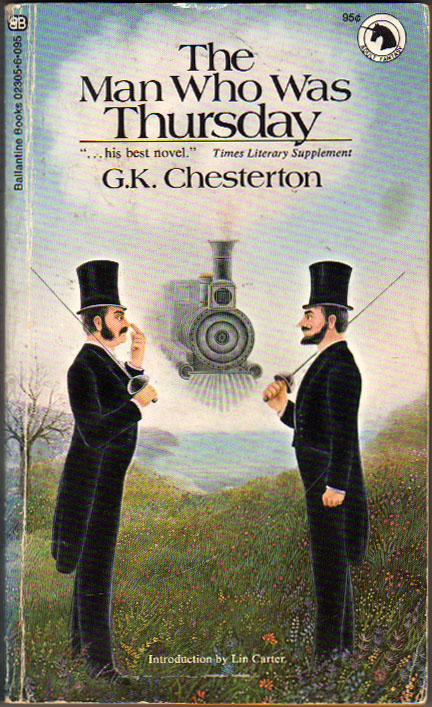
Hundred Word Reviews: “The Man Who Was Thursday” by G.K. Chesterton

Challenge No. 2: A Book a Friend Recommended

“The Man Who Was Thursday” by Gilbert Keith Chesterton, finished January 28. Recommended by my brilliant friend and college roommate, Katie.

man-who-was-thursday

Hundred Word Review: Gabriel Syme, an undercover policeman, meets a young poet who promises a “very entertaining evening.” Before he knows it, he is elected to an elite anarchist council and given the name Thursday. In trying to overthrow the fearsome leader, Sunday, Syme meets unsuspected allies and new enemies in a wild chase of gunpowder, treason, and plot. This book makes your brain hurt, but it’s so fun to read! It’s scary, suspenseful, and hilarious with a mind-blowing twist. If anything, read it for the insults: “If you’d take your head home and boil it for a turnip, it might be useful.”

Check out PopSugar’s challenge and let me know in the comments if you have a book recommendation for one of the categories. And if you want to do the challenge yourself, let me know what you’re reading!

Next up, “a book with nonhuman characters.”

Happy reading!

Vicky